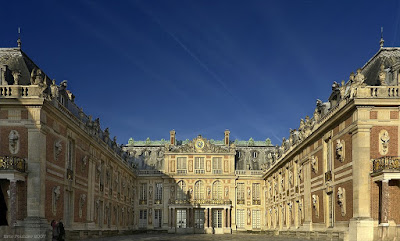
Palace of Versailles, Chateau de Versailles, is located in the Ile-de-France region of France. Nowadays Versailles is a suburb of Paris, 20 km from the city. So, if you're in the area, you can visit the place. Don't miss it. Palace of Versailles have to be seen.
Chateau de Versailles, France
Gardens of Versailles, France
Garden view, Palace of Versailles, France
Originally, there was built a hunting lodge for Louis XIII in 1624. He was pleased with the nature and location. Back then Versailles was a county village which started to develop thanks to its location on the road from Paris to Normandy. The successor of Louis XIII - Louis XIV ordered renovation and expansion of the chateau. And....later, in 1682 the court was officially moved there. It became the centre of political power. But, the Royal family had to return to Paris after the beginning of the French Revolution. The Palace of Versailles became a symbol of the Absolute Monarchie.
Fountain, Gardens of Versailles, France
Gardens of Versailles, France
Fountain of Neptune, Palace of Versailles, France
Bronze Sculpture of La Seine, Chateau de Versailles, France
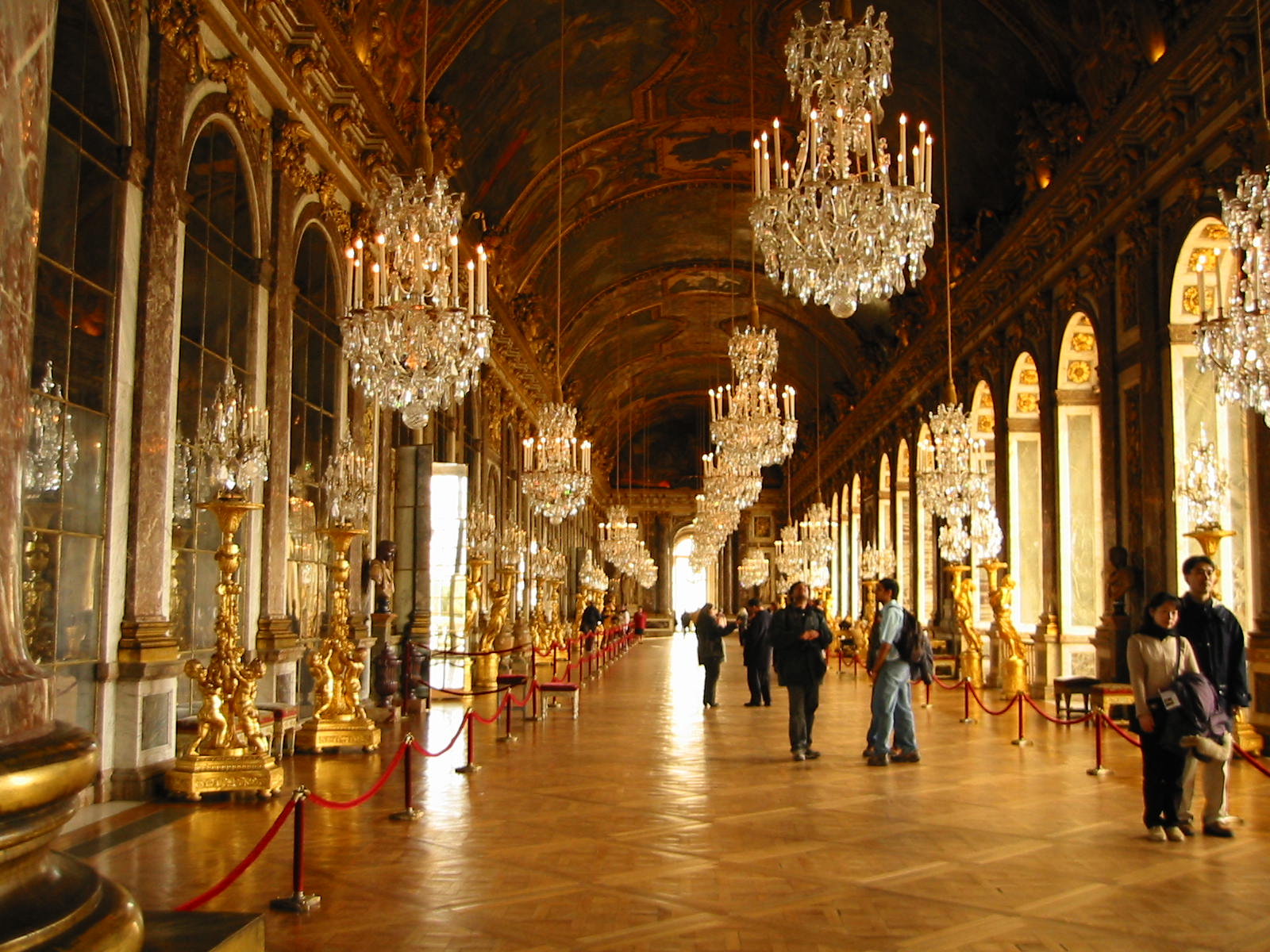
There were four building campaigns. The all four corresponded to Louis XIV's wars. During the first building campaigh were made some modifications to the chateau and the gardens so they can accomodate 600 guests. The second made the palace look a lot like it is today. Then were built the Appartment of the roi and the Appartment of the queen. In the thitd campaign in addition to the Hall of Mirrors were designed the Orangerie and the north and south wings. The Gardens were also further developed. The fourth campaign was mostly about the Royal chapel and some improvements of the Appartment of the king. With this all constructions stopped. No more actions were taken of the Sun King / Louis the Great/.
Thirty years later Louis XIV made some changes, but they were far more unsignificant in comparison to these made of tha Sun King.
Chateau de Versailles, France
Fountain, Gardens of Versailles, France
Hall of mirrors, Palace of Versailles, France
Ceiling, Palace of Versailles, France
Palace of Versailles, inside, suite, France
Palace of Versailles, inside, France
Main features of Palace of Versailles:
- Grand appartments - Appartment of the King, Appartment of the Queen
Appartment of the King:
Salon de Diane
Salon de Mars
Salon de Mercure
Salon d’Apollon
Salon de Jupiter
Salon de Saturne
Salon de Vénus
Appartment of the Queen:
Chapel
Salle de gardes
Antichambre
Chambre
Grand cabinet
Oratory
Petit cabinet
- Small appartments - Appartment of the King, Appatrment of the Queen
- Hall of Mirrors
- Chapels of Versailles
- The Opera
- Museum of the History of France
- Gardens of Versailles
The Gardens of Versailles, France
Chateau de Versailles, France
Versaille - looking from the Latone Fountain out to the Grand Canal, France
Le Hameau de la Reine, Petit Trianon, Versailles, France
There is so much to see and do in Paris that you can spend a lifetime trying to explore all your options. Here are the places you absolutely must visit:
Avenue des Champs-Elysées, Paris
Avenue des Champs-Elysées.
This prestigious avenue in Paris with all its luxury shops, cafés, cinemas and the clipped horse-chestnut trees, has become one of the most famous streets in the world. This is probably the most wonderful place to start your tour, as you can walk all the way down to Rue de Rivoli. It stretches from Place d’Etoile to Place de la Concorde. It’s better to start the promenade from Arc de Triomphe, as it is situated at Place Charles de Gaulle. Arc de Triomphe is built by the order of Napoleon I as promised to his soldiers to celebrate their victories. Under the arch you can find the tomb of the un-known soldier.12 major streets meet at this roundabout. At Place de la Concorde you will see the Luxor obelisk, a gift from the viceroy of Egypt to King Louis-Phillip. During the French Revolution, prior to the erection of the obelisk, this square was a bloody scene, where a guillotine was placed and many lost their head including Marie-Antoinette and Louis XVI. Near the Place de la Concorde, the street is bordered by the Jardins des Champs-Elysées, beautifully arranged gardens with fountains. The Champs-Elysées is used for all the major celebrations. This is where Parisians celebrate New Year's Eve and where the military parades are held on the 14th of July.
The Eiffel Tower
The Eiffel Tower, Paris
You probably have the best view of the Eiffel Tower from Palais de Chaillot at Place du Trocadéro.The Eiffel Tower was built for the World exhibition in 1889 celebrating the French Revolution. The 324 meter high metal (puddle iron) structure was built by Gustave Eiffel as a temporary monument. It took 2 years to build the tower and it did not take long for La Tour Eiffel to become the symbol of Paris. The tower is the tallest building in Paris and the most-visited paid monument in the world. Eiffel Tower consists of 3 landing floors. Tickets can be purchased to ascend, by stairs or lift, to the first and second levels.The famous and pricy restaurant, Le Jules Verne is located on the second floor of the tower. It is better to make a reservation in advance. The Eiffel Tower is open every day of the year.
Dome des Invalides, Paris
You can spend some time at Palais de Chaillot which includes a Marine / Navy Museum, Museum of Man and the Museum of French Monuments. There are some good cafes at Place du Trocadéro. Pont d’Iéna connects Place de Chaillot to the Eiffel Tower. You can walk through the gardens and across the Seine to La Tour Eiffel.
After visiting the tower, head towards Dome des Invalides (cannot miss the golden dome), Dome church, where you can find Napoleon’s Tomb. By the order of Louis XIV, the Dome was built to be a burial site for the royal families.
Montmartre, the famous Paris hill
Sacré-Coeur, Montmartre, Paris
You can’t miss this lovely place in your visit to Paris. Montmartre is the highest natural point in Pariswith a gorgeous view of the city. Montmartre is primarily known for the white-domed Basilica of the Sacré Cœuron its summit and as a nightclub district. The construction of Sacré-Coeur was due to the promise to God made by Alexandre Legentil and Rohault de Fleury for Paris to be saved from invasion and damage during the Franco-Prussian war. The building was built in Roman-Byzantine style. The bright colors and shades in the Basilica make it look bright and welcoming. Many artists had studios or worked around the community of Montmartre such as Salvador Dalí, Amedeo Modigliani, Claude Monet, Piet Mondrian, Pablo Picasso and Vincent van Gogh. In this area you can also see Place du Tertre. The many painters on this place are ready to sketch out your face, a nice souvenir of Paris. The place Pigalle and the Moulin Rouge can be found in the south. The famous night club is the place where Cancan dance was born. The place is a real classic. Here have been sung Edith Piaf, Frank Sinatra and Liza Minnelli. Today it is one of the biggest attractions in Paris.
Moulin Rouge, Paris
Notre Dame de Paris
Notre Dame de Paris
Notre Dame de Paris is located at Ile de la Cité, an island in the Seine river. Notre Dame is an important example of French Gothic architecture, sculpture and stained glass. The famous cathedral is also an active Catholic church, a place of pilgrimage, and the focal point for Catholicism in France - religious events of national significance still take place here. The coronation of Henry VI and Napoleon I took place here.
Caffe Les Deux Magots, Paris
The oldest church in Paris, St. Germain-des-Prés is located in the area of St. Germain-des-Prés . Home to a number of famous cafés, such as Les Deux Magots and Café de Flore, the Saint-Germain-des-Prés area was the center of the existentialist movement (associated with Jean-Paul Sartre and Simone de Beauvoir).
Panoramic view of Jardin des Tuileries, Paris
Near Place de la Concordeis situated Jardin des Tuileries. It is created by Catherine de Medici The original division of the space, by allees, has survived many changes. It began as a private royal pleasure garden, with flowers and fruits. After 1594, Henri IV had a terrace built along what is now the Rue de Rivoli. Jardin des Tuileries become a public park after the French Revolution.
Elysee Palace
Main entrance of Elysee Palace, Paris
Elysee Palaceis is the official residence of the president of France. The building was built in 1722 in French classical style. It is located near the famous Avenue des Champs Élysées. Today on the territory of the city, during the 18th century the Elysee Palace represented luxury suburban residence. Élysée Palace is used as the residence of the head of the state of France since 1873 with the beginning of the third French Republic.
Louvre
Louvre, Paris
Piramid at Louvre, Paris
Regarded as the most famous museum in the world, the Louvre is located in the building of the former royal palace, on the Right Bank of the Seine. The building was built in 1190 by Philip the second. The purpose of this beautiful fortress was to protect Paris from the Vikings. The castle became a museum on the 10th of August 1793. Now here are kept extremely valuable masterpieces of French and world art and culture, such as the Mona Lisa, painted in the 16th century by Leonardo da Vinci. Other of the most famous works of art in the museum are the Venus of Milo, the Nike of Samothrake, the Dying Slave by Michelangelo. The most recent addition to the Louvre was the construction of the glass pyramid, which functions as the museum's main entrance. The pyramid was built in 1989 by the renowned American architect I.M. Pei. The glass pyramid allows the sunlight to come in on the underground floor
Sculptures in Louvre, Paris
Drawing room of Napoleon III apartments in Louvre
The Sorbonne
The Sorbonne, Paris
The Sorbonne is one of the elitest universities in the world. It consists of 13 faculties, all located in the heart of the French capital, not far from the Luxembourg gardens. It is one of the oldest universities in the world. In the beginning Sorbonne became a center of theological learning with scholars including Albertus Magnus and St. Thomas Aquinas. The Sorbonne's international reputation has always placed it among Europe's most important universities. It is a vital part of a long university tradition.
The Sorbonne is situated in Quartier Latin. The area gets its name from the Latin language, which was once widely spoken in and around the University since Latin was the international language of learning in the Middle Ages. It currently still houses various higher education establishments, such as the École Normale Supérieure, the École des Mines and the Jussieu university campus.
Quartier Latin, Paris, France
Seine River
View from the Eiffel Towel to Seine River
Seine River is the soul of Paris. In this cosmopolitan city everything is strongly connected with the river. Here are concentrated the majority of the urban attractions. With so much to see leisurely from the river, you definitely should go on a Seine river cruise during your Paris visit.
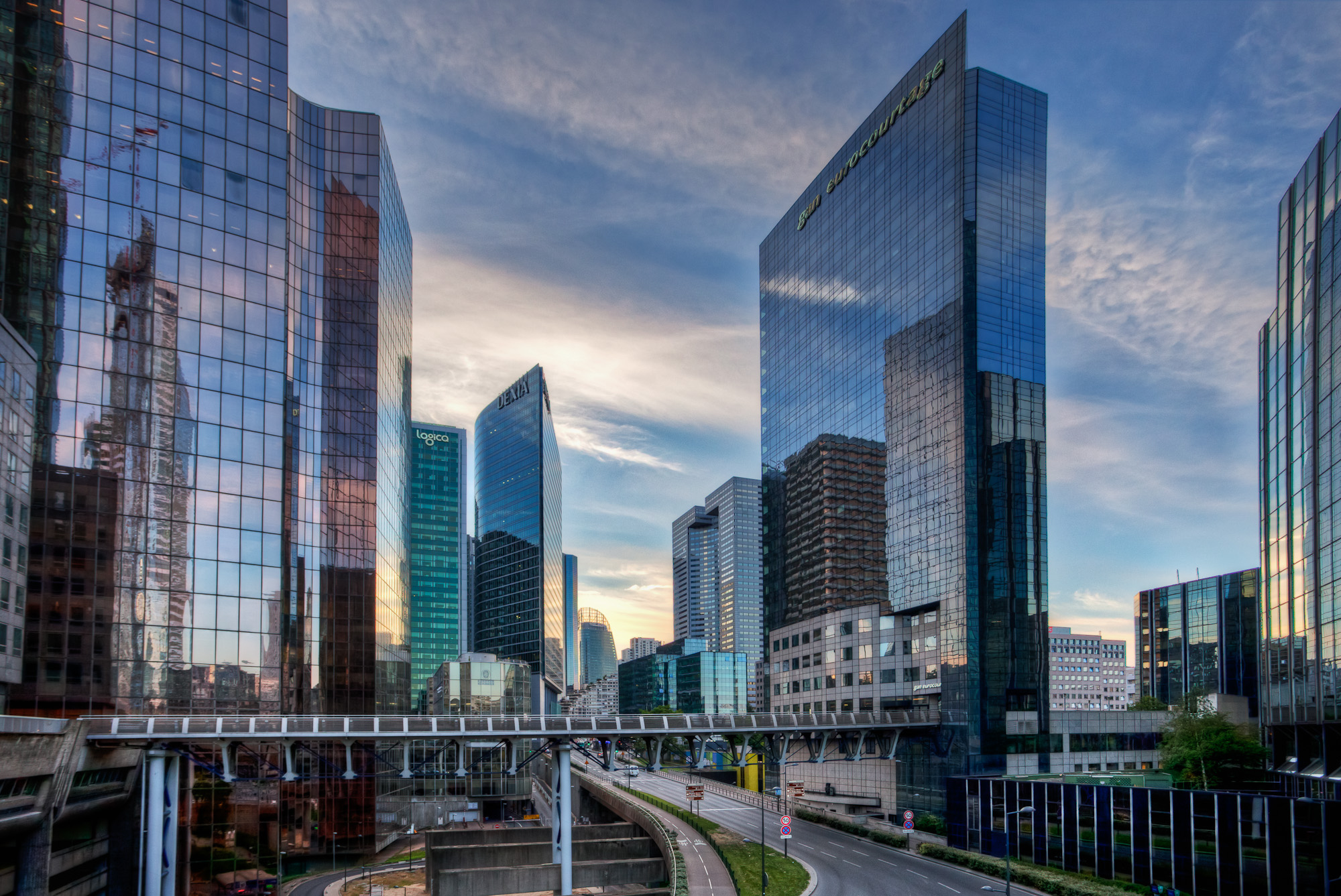
La Defense
Grande Arche de la Defense, Paris
La Defense, Paris
La Defense is an ultra modern business district in Paris. There are lots of skyscrapers. All of them are very fine and elegant buildings of glass and steel. The local skyscrapers are not the highest in Europe, but in contrast, one of the most attractive in design and are in perfect harmony with the ancient architectural profile of Paris. In this area is situated the Grand Arche. It’s idea is to be a 20th-century version of the Arc de Triomphe: a monument to humanity and humanitarian ideals rather than military victories.
The Centre Pompidou
The Centre Pompidou, Paris
The Centre Pompidou is the most spectacular 20th century building in Paris. It was designed in 1977 by architects Renzo Piano and Richard Rodgers to make art and culture accessible to everyone as initiative of French president François Mitterrand. The French National Museum of Modern Art in Centre Pompidou has first class collections of paintings spanning the whole 20th century. Picasso, Chagall, Matisse, Kandinsky and Klee are among the painters well represented at the museum.
Palace of Versailles (Chateau de Versailles)
Palace of Versailles (Chateau de Versailles)
Palace of Versailles (Chateau de Versailles).Versailles Palace is a World Heritage by UNESCO. It is considered to be one of the most beautiful palaces in the world. It has been used for a residence of the French kings. The most famous inhabitant of the Palace of Versailles is the Sun King - Louis 14th. The palace is located in the suburb of Versailles, south of the pulsing life of this vibrant metropolis. The palace includes huge gardens where the Sun King have loved to walk.
Versailles, France
Gardens of Versailles, France
Montparnasse
The name Montparnasse comes from the nickname "Mount Parnassus", given to the neighborhood by students who came here to recite poetry. In the 18th century, the Boulevard Montparnasse was laid down and during the Revolution, lots of dance floors and cabarets opened their doors. The neighborhood became famous at the beginning of the 20th century when it was the heart of intellectual and artistic life in Paris. It attracted people from all over the world come to experience the bohemian lifestyle. Here the great minds gathered: Picasso, Modigliani, Soutine, Zadkine, Paul fort, Apolinaire, Max Jacob, Hemingway, Fargue, Breton, Cocteau, Fitzgerald, Henry Miller, Miro, Fujita. All have left their eternal mark in the memory of this area.
Montparnasse tower
Opera Garnier
Grand Escalier, Opera National, Paris
Opera Garnier, Paris
Construction of the opera building started in 1862, but it wasn't completed until 1875, partly because an underground lake was discovered during construction. The small lake still exists under the opera building. It was the hiding place of the 'Phantom of the Opera' in Paul Leroux's famous play. The majestic Opéra Garnier is now mainly used for ballet performances. The building is one of the largest theatres in the world by acreage. The interior of the Opéra Garnier building is even more impressive than its exterior. The Opera de Paris Garnier is located at the Place de l'Opera.
Panthéon
It is situated in the Latin Quarter. The conception here is that when King Louis XV suffered from a serious illness in 1744 he vowed to build a church dedicated to Sainte-Geneviève if he would survive. After he recovered, he entrusted the Marquis of Marigny with the task of building the church, which was to replace the 6th century basilica, at the time known as the Abbey Sainte-Geneviève.
Versailles is the palace of the versalmonator, means a power house or a chateau. In the older days, Versailles was a small village, it is only now that it is a sub urban part of Paris which is the capital of France. Versailles in late 17th century was considered the strongest political power house where the monarch used to sit, when the royal family was enforced to come back to Paris. The political side to the building has made it so famous that tourists like to pay their visit to this building.
The building covers a total area of 110,000 square meters with 700 rooms in it with 67 staircases and more that 200 windows. The Versailles for sure is a grand place worth visiting. The building has lots of paintings, handmade sculptures, drawings, objects and furniture.
It was during the year 1038, when for the first time, the name Versailles was coined. During this period, the villagers of this village was on a small castle and there was a church which was governed by the local landlords of the village. Versailles was built by the French men and it was also called the unofficial capital of France. It is only ten kilometers away from Paris. The way in which the streets of Washington DC are made have been based upon Versailles’ model of streets. The city welcomes its visitors with open arms and provides one of the best luxurious hotels, food & site seeing facility to them. Whenever visitors plan to visit this part of the city, they make it a long holiday so that they can spend quality time in the Versailles.